In industrial pump operations, the liner serves as a core wear part that directly withstands abrasion and corrosion. Its performance determines the equipment's reliability and total operating costs. In recent years, driven by advances in materials science, ceramic pump liners have become the preferred upgrade over traditional metallic liners in industries such as oil drilling, chemical processing, flue gas desulfurization (FGD), and new energy manufacturing, owing to their superior wear resistance and chemical inertness.
Based on field data and industry standards, this article provides an in-depth analysis of ceramic pump liner selection, material comparisons, installation precautions, and maintenance best practices.
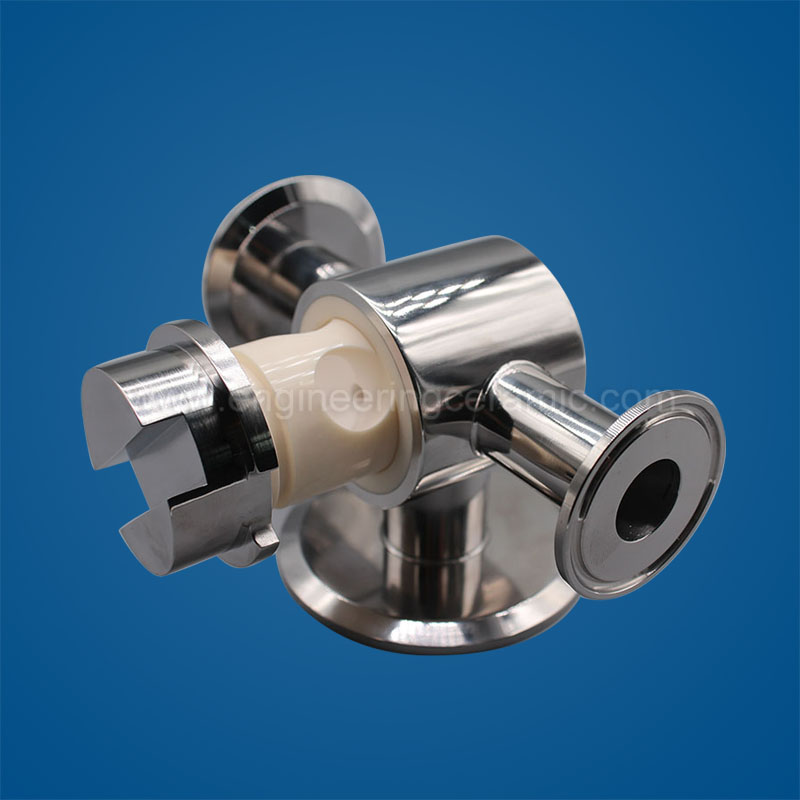
Compared with conventional bimetallic liners, ceramic liners offer competitive advantages in two key dimensions: hardness and chemical inertness.
Extended Service Life: In severe service conditions involving high-pressure slurries, drilling muds, and abrasive solids (e.g., quartz sand, iron filings, rock cuttings), metallic liners often fail rapidly due to abrasive wear. Ceramic liners typically deliver 4,000 to 10,000 hours of continuous service—5 to 10 times longer than bimetallic alternatives. This dramatically reduces maintenance frequency and labor intensity at drilling or production sites.
Protection of Mating Components: The inner surface of a ceramic liner can achieve an exceptionally high finish (surface roughness as low as Ra 0.1–0.3 μm). This microscopic smoothness minimizes friction between the liner and the piston or plunger, reducing energy consumption while significantly extending the service life of expensive piston seals.
Not all ceramics are alike. The optimal choice depends on the specific medium and operating conditions. Below is a side-by-side comparison of the three most common ceramic materials:
| Material Type | Alumina (Al₂O₃) | ZTA (Zirconia-Toughened Alumina) | Zirconia (ZrO₂) |
|---|---|---|---|
| Key Strengths | Very high hardness (HV 13 GPa); excellent resistance to acids and alkalis. | Balanced performance: good hardness combined with enhanced toughness; cost-effective. | Exceptional fracture toughness (9 MPa·m¹/²) and flexural strength (800 MPa). |
| Typical Applications | Highly corrosive, low-impact chemical media, such as lithium-battery electrolytes and food additives. | Oilfield drilling, shale-gas fracturing, and high-sand-content high-pressure mud applications. | Extreme conditions involving high pressure, high impact, and large solid particles, e.g., deep-well drilling and slurry transport. |
| Selection Advice | Choose when chemical corrosion dominates and solids are relatively soft. | Currently the most popular upgrade in oilfields, replacing traditional chrome-steel liners. | Choose when liners frequently fail by fracturing (rather than by wear). |
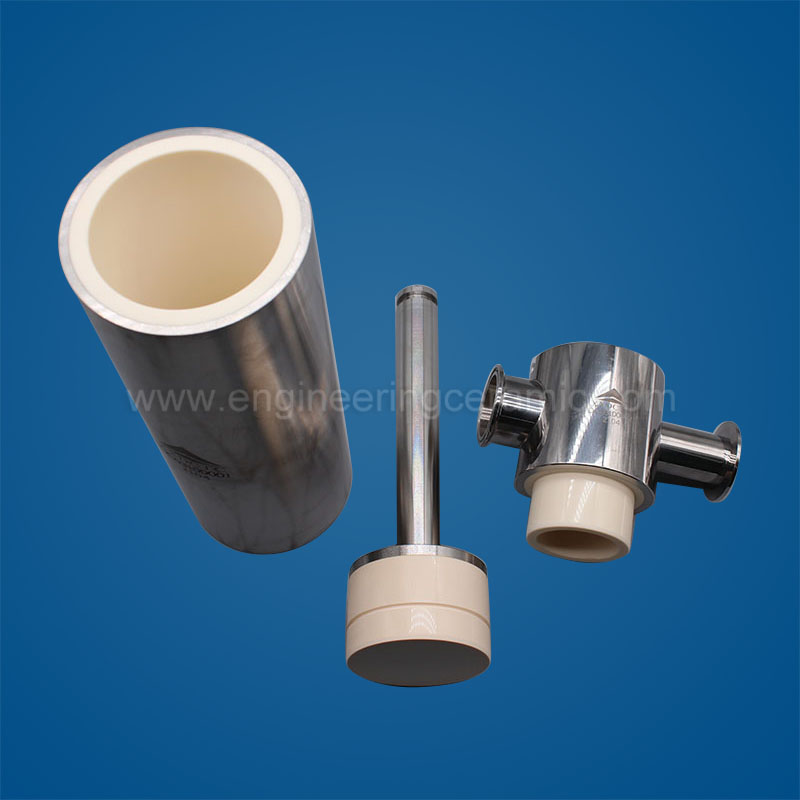
Ceramic materials offer extreme hardness but are inherently brittle (low impact resistance). Field failure statistics show that over 80% of ceramic liner failures occur during installation, not during operation. To avoid premature failure, strictly follow these procedures:
No Direct Hammer Strikes: When pressing a liner into or out of the housing, never strike the ceramic body or metal shell directly with a steel hammer. If impact assistance is required, always use a copper bar, hardwood block, or dedicated buffer pad to distribute the force evenly. Direct impact can create micro-cracks invisible to the naked eye, which will propagate and cause catastrophic failure once the pump is under load.
Verify Assembly Clearance: Before installing the piston, ensure that the maximum outer diameter of the piston body and the inner diameter of the ceramic liner maintain a minimum assembly clearance of 0.20 mm. Insufficient clearance or burrs on the metal piston can create "point-contact" stress during reciprocating motion, resulting in scoring or cracking of the liner's inner wall.
Winter Freeze Protection: During shutdowns in low-temperature environments, completely drain all liquids (e.g., mud or water) from the pump chamber and liner. If trapped liquid freezes and expands, the resulting radial pressure can easily fracture the ceramic insert.
When a liner reaches its wear limit and must be replaced, the removal method depends on the nature of the pumped medium:
For Light-Duty or Clean Media: If the medium is a clean liquid with little solids content, the liner can usually be separated from the housing without difficulty. Insert pry bars symmetrically into the slots or ports at both ends of the liner and gently work it out.
For Heavy-Duty or High-Viscosity Media: If the medium contains high solids content or is highly viscous, the liner may become seized to the housing. In this case, use a brass drift punch or hardwood dowel, and gently tap the outer circumference of the liner evenly to gradually drive it out of the housing. Never apply concentrated force on one side only, as this will cause the liner to tilt and lock up further.
For specific applications, refer to the following technical standards to ensure compliance and reliability:
Flue Gas Desulfurization (FGD) Applications: Refer to the Chinese standard T/CGMA 011001-2017 (Ceramic-Lined Pumps for Flue Gas Desulfurization) , which mandates a composite structure of metal housing + alumina ceramic lining for wetted parts, with a design service life of no less than 5 years for impellers and wear plates.
Slurry Transportation: Ensure that the maximum particle size of solids in the medium does not exceed 80% of the minimum flow-cross-section dimension of the pump. This prevents clogging and mitigates impact wear on the ceramic lining.
Upgrading to a ceramic pump liner is fundamentally a strategy of combating wear with hardness and combating corrosion with chemical inertness. While the initial procurement cost is higher than that of metallic liners, the total cost of ownership (TCO) is overwhelmingly favorable when accounting for the significantly longer service life and the protection ceramic liners provide to mating piston components.
The key to success lies in disciplined installation practices and strict avoidance of impact loads. With proper handling, a ceramic liner will deliver durable, reliable, and cost-effective performance in even the most demanding industrial environments.